
Selected colour swatches
You can order up to 20 colour swatches

How to repaint a door
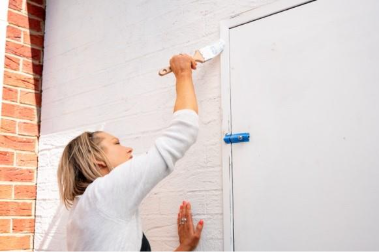
Looking to refresh your home's curb appeal or give your backyard entryways a professional, durable makeover? Then it’s time to give your doors a refresh! From the prep work to the choosing the right paint for the job, our practical, step-by-step tutorial will help you achieve a truly professional, long-lasting finish on your doors.
This how-to guide shares our top exterior door painting tips, taking you through the whole process to ensure your freshly painted door can withstand the elements and look stunning for years to come.
Why Repaint a Door?
A fresh coat of paint can dramatically improve your home's appearance, especially on doors that face the street.
Repainting exterior doors is also important as it creates a critical barrier that defends against harsh weather and extends the lifespan of your doors. It also helps address common issues like fading, peeling, or chipped paint before they lead to any structural damage or replacements, saving you time and money. So, whether you are painting a front door, garage doors, or a side gate, repainting is essential and not just for protection against the seasons but also for aesthetic purposes too.
Choosing the Right Paint for Doors
Since your exterior doors often take a beating from the elements, you’ll want to pick a durable and weatherproof door paint. You will also want the paint to be suitable for whatever material that your door is made from, whether it’s wood, metal or a composite surface. When it comes to choosing a paint, look for key features such as strong UV protection to help stop fading, mould and mildew resistance, and flexibility so that the paint doesn’t crack or bubble when the temperature changes.
Not all paint finishes are the same either. A semi-gloss paint for doors is the standard as it’s hard-wearing and easy-to-clean, which is important for a high traffic area. A satin finish is another great choice if you’re after a more subtle sheen and a soft, contemporary look.
No matter the colour you decide on, ensure that you are using high quality paint, such as British Paint® Paint & Prime Semi Gloss. Using a better quality paint will improve the longevity of your door and save you maintenance headaches down the road.
British Paints Paint & Prime
British Paints® Paint & Prime is the perfect choice for re-doing your exterior doors as it’s quick and easy to apply, thanks to the combination of an undercoat & topcoat in one. The formula can be used over water or oil-based topcoats and dries down to a hard wearing and resilient finish that’s easy to clean. With its non-yellowing technology, you can keep your paint job looking fresh for years to come too.
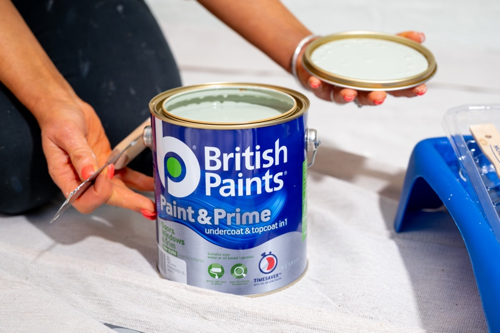
Step-by-Step Guide to Repainting an Exterior Door
Gather Tools & Materials
To repaint your exterior door, you’ll want to pick up the following products:
· Paintbrushes
· Rollers
· Sandpaper
· British Paints® Paint & Prime
· Painter’s tape
· Drop sheets
· Cleaning rags or brushes and detergent
How to prep a door for repainting
To get your door looking fresh and make sure your paint job lasts, preparation is key. First, remove all hardware like handles, locks, (and hinges if you are taking the door off). You’ll then want to thoroughly clean the door, using a good detergent and cleaning rags or brushes to get rid of any dirt, grease, or old paint residue. Once the door is cleaned cover areas with tape.
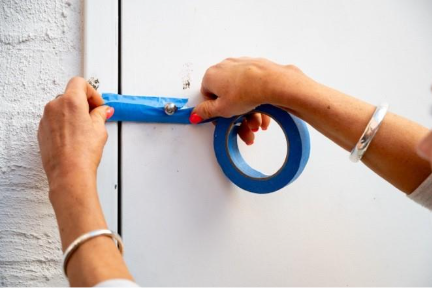
Sand and Repair
As part of the exterior door paint preparation process, you’ll want to lightly sand the entire surface until it’s smooth so that your paint adheres well to the door. Once sanded, fill any cracks, dents, or holes using an appropriate filler for your door material. Let the filler cure completely before moving on!
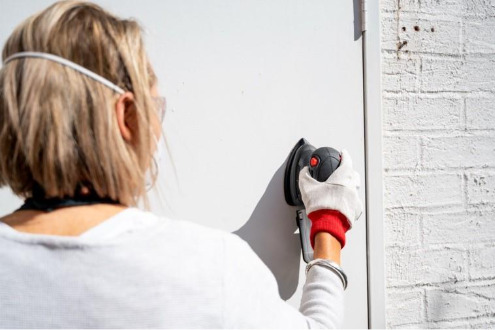
Prime if Needed
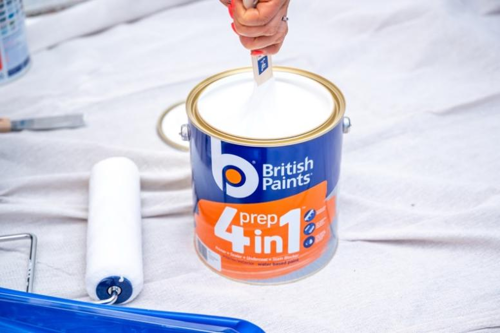
If your door has any bare wood, exposed metal, or newly repaired areas after removing old door paint, you’re going to need to prime it. This can be easily done with a primer like British Paints Prep 4in1 Water Based, which combines the functions of a sealer, primer, undercoat and stain-blocker in one allowing for better adhesion, a more even colour application, and a long-lasting finish.
If you only had to lightly sand, then you can skip this step as the British Paints® Paint & Prime undercoats as well.
=
Apply the Paint
Once you are done with the door sanding and priming, now comes the fun part!
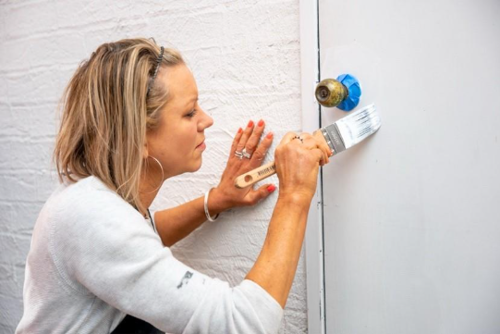
1. Start by cutting in with a paint brush around all the door edges and any hardware.
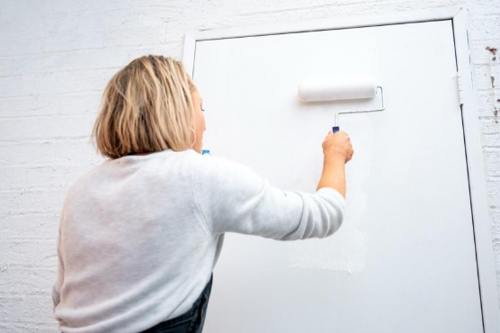
2. Using a roller, paint using long strokes, working quickly to maintain a wet edge for a smooth, even, streak-free finish.
3. If you have a decorative door, you’ll want to make sure you’re painting door panels in sections. Start with the mullions first (the raised sections in the middle). Then paint the main panels, followed by the rails at the top and bottom and finish by painting the stiles (the sections on the sides).
4. Allow to dry for at least two hours.
Second Coat
Once dry, give your door another very light sand. Make sure to clean up and remove all dust and sanding residue before painting a second coat.
This second coat is key for achieving a more uniform coverage of your chosen colour, as well as ensures your paint has greater durability against the elements. You can use the same painting technique as the first coat.
Finishing Touches and Clean-Up
Carefully remove all the painter's tape while the paint is still wet if possible. Clean your brushes and rollers as soon as possible with water, and then safely store any leftover paint in a cool, dry place.
Make sure to properly get rid of any rubbish and clean up any sanding or paint debris. Now your repainted exterior door is complete!
FAQs
How long should I wait between coats on a door?
This can depend on the type of paint you use, so be sure to check the can, but you should usually wait about 2–4 hours for the first coat to dry before recoating.
Do I need to undercoat a previously painted door?
If the existing paint is in good condition, you can often skip a separate undercoat, especially when using an All-in-OneÔ paint like British Paints® Paint & Prime. However, you must always use a primer on any surface with bare wood, exposed metal, or any areas you have patched with filler.
Can I paint a metal door with standard exterior paint?
You can if the paint you are using is of a high-quality, as these exterior paints are formulated to adhere to both metal and wood surfaces. However, make sure there bare or rusty metal because this will need to be treated first.
How do I prevent peeling or cracking over time?
The best prevention method is good preparation, including proper cleaning and sanding. You should also look for a quality exterior paint that offers UV protection and flexibility so that it can withstand temperature changes.
What's the best weather for repainting an exterior door?
Aim for a dry day with low humidity and mild temperatures (not too hot or cold). Avoid painting in direct sunlight or when rain is expected, as extreme conditions can affect how the paint dries and cures.
How do I maintain a freshly painted door?
To keep your door looking fresh for as long as possible, you’ll want to regularly clean it with a mild soap and water solution to remove any dirt or scuffs. Every so often, check your door’s surface for small chips or wear and touch them up to prevent major damage or having to repaint again so soon.
Ready to Transform Your Door?
Now that you’re armed with our step-by-step guide about repainting an exterior door, all that’s left is to get started and DIY with confidence! Browse our exterior paint collection today and give your door a fresh, long-lasting finish with British Paints®.
Planning to paint an interior door, read our guide on how to paint an interior door.